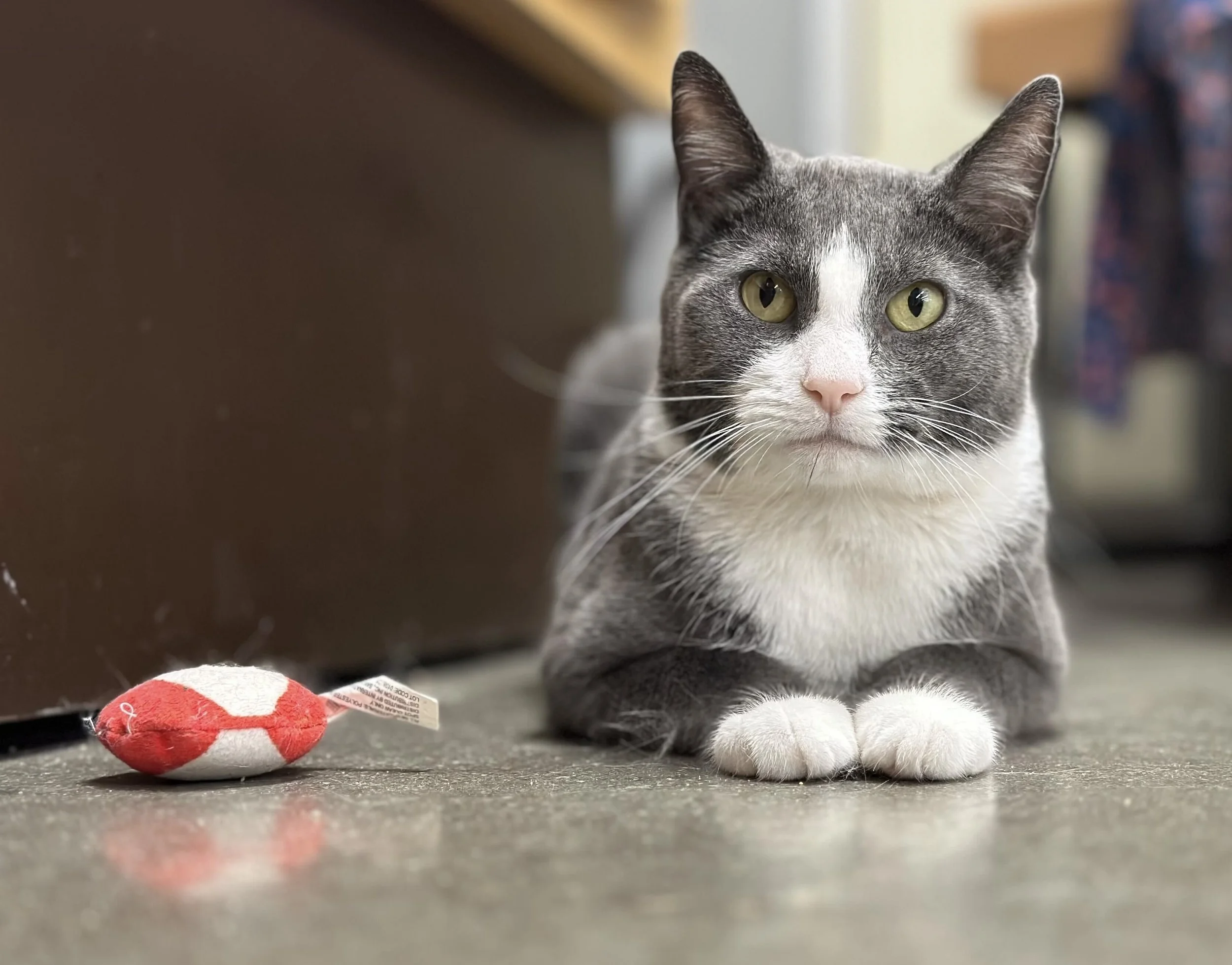
She nursed 14 orphaned kittens until her body ran out of calcium and her bones began to break. She didn’t stop. They found her nursing on two fractured legs.
In the spring of 2023, a large-scale hoarding case was discovered in a rural property in the hill country of central Texas. County animal control, assisted by regional rescue volunteers, removed 67 cats from a single-wide mobile home that had been sealed for an estimated 18 months. The owner had died inside. The body had been discovered by a utility worker checking a delinquent electric meter.
Most of the cats were in critical condition. Emaciated. Diseased. Many had to be euthanized on site.
But in the back bedroom — a room with no windows that had been closed off by a fallen interior wall panel — they found something that stopped every person on the rescue team where they stood.
A single tortoiseshell female. Approximately 4 years old. Lying on her side on a stained mattress.
Fourteen kittens were attached to her. Nursing.
Fourteen.
A cat has eight nipples. Every single one was occupied. Six additional kittens were clustered against her belly and sides, rotating in, latching on the moment another detached. The system was organized. Instinctive. Relentless. They were feeding in shifts.
The kittens ranged in age from approximately 2 weeks to 7 weeks. Different colours. Different sizes. Different developmental stages. At least four separate litters from at least three different mothers, based on the veterinary team’s later assessment.
None of those mothers were alive. Eleven deceased adult females were recovered from the property. The cause of death in most cases was starvation, disease, or organ failure from chronic malnutrition.
One cat had survived. And she had taken every living kitten and fed them herself.
The rescue coordinator — a woman who had worked hoarding cases across the southern United States for 11 years — said she knew immediately that something was medically wrong with the tortoiseshell beyond starvation. The way she was lying wasn’t normal. Her body wasn’t just thin. It was wrong. The angles were wrong.
The veterinarian confirmed it within the first hour of examination.
The cat — who would later be named Fourteen — was suffering from severe nursing-induced hypocalcaemia that had progressed to a stage the veterinary team had only previously read about in textbook case studies.
Lactation requires enormous amounts of calcium. A cat nursing a normal litter of 4 to 6 kittens in healthy conditions can maintain calcium homeostasis through diet. A cat nursing 14 kittens simultaneously with no adequate food source cannot.
Fourteen’s body had been pulling calcium from the only reservoir it had left.
Her bones.
The process is called osteoclastic resorption — the body literally dissolves its own skeletal structure to harvest calcium for milk production. In Fourteen’s case, the process had been ongoing for an estimated 5 to 7 weeks based on the degree of bone density loss.
Her skeleton was disintegrating.
The X-rays were devastating.
Both rear tibias showed stress fractures — not from impact, not from trauma, but from simple bone weakness. The bones had become so thin and porous from calcium depletion that they had begun to crack under her own body weight. The left rear tibia had a complete transverse fracture. The right had two incomplete fractures. Both front legs showed advanced osteopenia — the cortical bone walls had thinned to less than 40 percent of normal thickness.
Her pelvis had a hairline fracture on the left ilium.
Her ribs — four of them on the right side — had micro-fractures visible on high-detail imaging.
Her jaw — the mandible on both sides — had become so demineralized that the veterinarian could flex the bone slightly with gentle finger pressure. A healthy cat mandible is rigid as stone. Hers bent like green wood.
She had been nursing on two broken legs.
She had not stopped.
The veterinary team calculated the caloric and calcium expenditure required to sustain milk production for 14 kittens and compared it to the estimated nutritional resources available to her in that sealed room. The math didn’t work. It couldn’t work.
Her body had made up the deficit by consuming itself — first fat, then muscle, then calcium from bone. She had been running a biological deficit so extreme that her skeleton had become structurally unsound, and she had continued nursing because the kittens’ demand triggered a hormonal cascade — prolactin and oxytocin — that overrode every shutdown signal her body was sending.
Her brain was telling her to stop. Her hormones wouldn’t let her. And somewhere in between, she had made whatever decision a cat can make and chosen the hormones.
She chose to keep feeding.
Even when it broke her.
The rescue team’s veterinarian said something that no one on the team has ever forgotten:
“Her body was cannibalizing her skeleton to make milk. Her bones were fracturing under her own weight. She could not walk without pain so severe that most animals would have gone into shock. And she was lying there — on a stained mattress in a dead woman’s house — nursing fourteen kittens who were not hers. Not because she didn’t feel the pain. Because she decided the pain was less important than the hunger she could hear around her.”
Fourteen was placed on immediate emergency calcium replacement — IV calcium gluconate administered slowly over 48 hours with cardiac monitoring because rapid calcium correction can cause fatal heart arrhythmias. She was simultaneously started on high-calorie nutritional support, vitamin D supplementation, and pain management.
The fractures could not be surgically repaired in her condition. Her bones were too weak to hold pins or plates. Instead, both rear legs were splinted externally and she was placed on strict cage rest for 8 weeks while her skeleton slowly — agonizingly slowly — began to rebuild.
She was not separated from the kittens during recovery. The veterinary team tried on the first day. She became so agitated — dragging herself toward the door of the kennel, vocalizing continuously, reopening her fracture sites — that they made the decision to keep four of the youngest kittens with her at all times, rotating them in groups.
She nursed through recovery. On splinted, fractured legs. In a veterinary kennel. With a skeleton that was still rebuilding itself.
She nursed until every single kitten was weaned.
The last kitten weaned at 9 weeks. On that day, the veterinary team ran a follow-up X-ray.
Her bones had begun to remineralize. The fractures were healing. The cortical walls were thickening. Her body, freed from the demand of milk production, had finally been allowed to repair itself.
She had held together — literally, structurally, skeletally — just long enough.
Fourteen is 6 now. She lives with a foster-turned-permanent family on a small ranch property in the Texas Hill Country. She walks with a noticeable stiffness in both rear legs — the healed fractures left callus formations on both tibias that restrict her gait slightly. She cannot jump higher than approximately 12 inches. She moves carefully, deliberately, like someone who knows what it feels like when the ground costs something.
Her jaw remains slightly softer than normal — the demineralization was too advanced for full recovery. She eats only soft food, carefully, on her left side.
Of the fourteen kittens, eleven survived to full health and were adopted. Two died during the first week of veterinary care from complications related to the hoarding environment. One — the smallest, a pale tortoiseshell female who was approximately 2 weeks old at rescue — died on the third day despite round-the-clock intervention.
The remaining eleven are scattered across Texas, in homes that will never know the full story of how they survived unless someone tells them.
One kitten was kept by the foster family. A ginger male who had been the largest and most persistent nurser of the group. His name is Demand.
Demand is 2 years old. He weighs 12 pounds. He is healthy, loud, and entirely unaware that the cat sleeping in the orthopaedic bed in the living room broke herself in half to keep him alive.
He lies next to her every afternoon. Sometimes on her. She never moves him. She never flinches. She takes his weight the way she took everything — without sound, without resistance, without any indication that it costs her anything at all.
The foster mother was asked once how she explains Fourteen to visitors.
She said:
“I don’t say she’s a hero. Heroes do one brave thing and the story ends. She did the same brave thing every hour of every day for seven weeks while her bones were breaking underneath her. That’s not heroism. That’s motherhood. The kind that doesn’t come from birth. The kind that comes from refusal. She refused to let fourteen kittens die. And her body said you’ll break. And she said then I’ll break.”

Leave a Reply